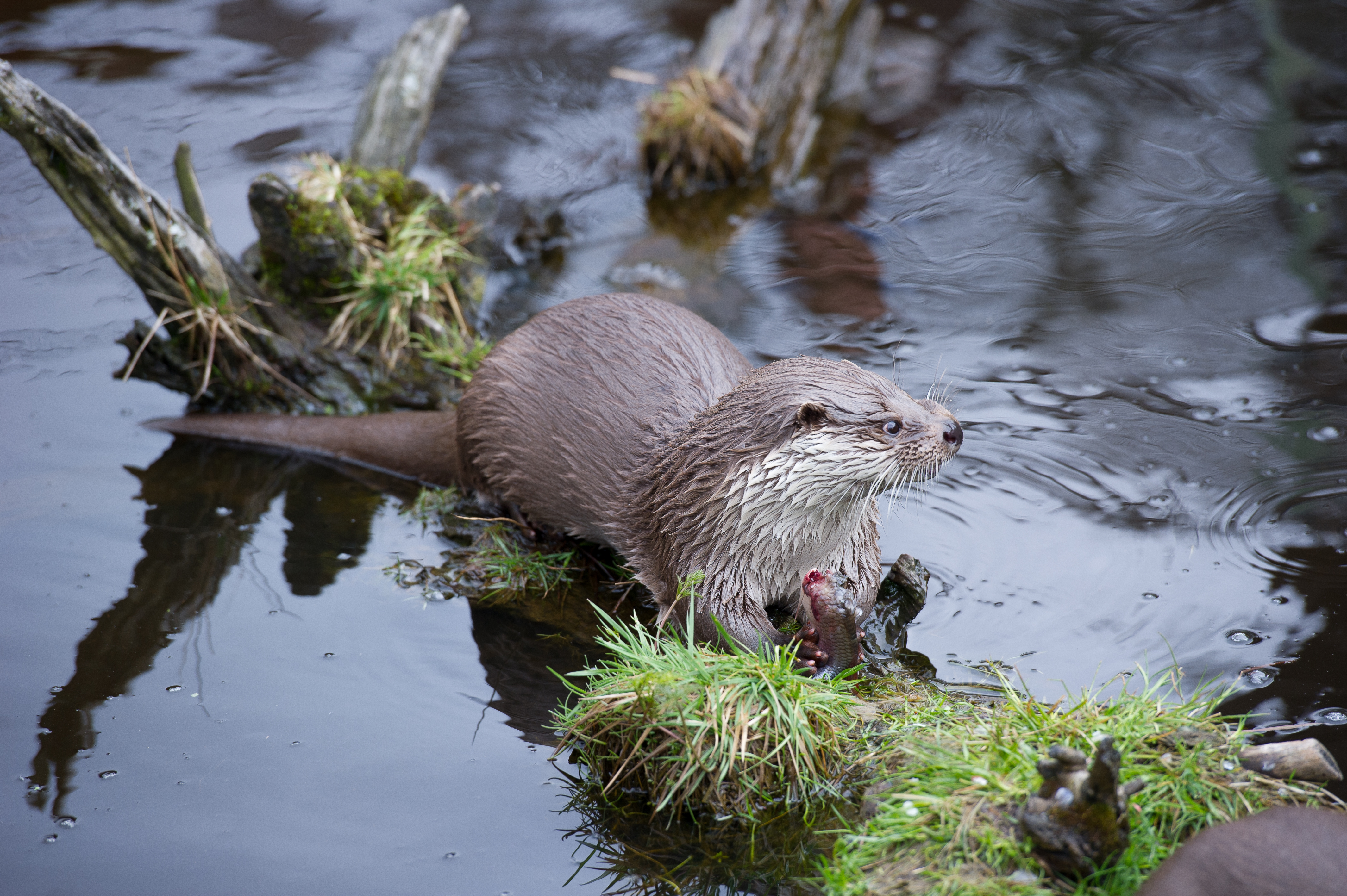
The Eurasian otter (Lutra lutra) is among the most closely studied freshwater mammals in France. Listed under Annex II and IV of the EU Habitats Directive and fully protected under French law since 1981, the species serves as an indicator of river system health — its presence broadly correlated with clean water, undisturbed banks and sufficient fish biomass.
Population surveys carried out by the Office français de la biodiversité (OFB) and regional natural heritage observatories suggest a gradual range expansion across several French catchments since the early 2000s. However, the species remains absent from long stretches of the Seine, Rhine and Meuse basins, where habitat degradation and road infrastructure continue to limit colonisation.
Historical Context
Otter populations in France declined sharply through the mid-twentieth century. A combination of factors drove this contraction: trapping (legal until 1972), water pollution from agricultural and industrial sources, the progressive canalisation of river channels, and a collapse of fish populations in heavily modified waterways. By the 1970s, the species had disappeared from many regions where it had previously been common.
The prohibition on hunting and the gradual improvement of water quality under successive national and European environmental legislation created conditions for partial recovery. The Loire basin, the rivers of Brittany and the Massif Central waterways were among the first areas to see confirmed signs of recolonisation during the 1980s and 1990s.
Current Distribution

According to data from the INPN (Inventaire national du patrimoine naturel), confirmed otter presence — based on spraints, footprints and direct sightings — has been recorded across much of western and central France. The Massif Central river network, the Breton rivers, parts of the Garonne catchment and certain tributaries of the Loire hold relatively stable populations.
The Dordogne and Vézère rivers in the Nouvelle-Aquitaine region have been highlighted in regional monitoring reports as areas of consistent otter activity. The Pyrénées streams feeding the upper Garonne also hold records, though at lower densities than in lowland areas further west.
Habitat Requirements
- Waterways with a minimum fish biomass sufficient to support a territory of 15–40 km of river bank
- Undisturbed, vegetated banks providing cover for holts (resting and breeding sites)
- Low levels of polychlorinated biphenyls (PCBs) and organochlorine compounds in water and prey species
- Road crossings that do not force otters to cross traffic — culverts or underpasses are critical at busy roads
- Minimal disturbance from intensive water sports or bankside recreation during the breeding season
Habitat Pressures
Despite legal protection, several persistent pressures limit otter recovery across France. Road mortality is documented as a significant cause of death, particularly along rivers that cross major transport corridors. OFB collision data collected through the national road mortality monitoring scheme consistently identifies otters as one of the more frequently recorded large mammal casualties near watercourses in western France.
Contamination of prey fish remains a concern in catchments with a legacy of industrial activity. Otters are apex predators within river food chains and bioaccumulate fat-soluble contaminants including PCBs and certain pesticides. Elevated tissue concentrations have been reported in post-mortem analyses, though the direct population-level effects are difficult to isolate from other stressors.
Bank modification — through reinforcement with concrete or riprap, clearance of riparian vegetation, and the replacement of natural channel morphology with engineered profiles — reduces the availability of suitable holt sites. Rivers managed primarily for flood defence or agricultural drainage tend to support lower otter densities than less-modified equivalents.
Monitoring Methods
Standard otter surveys in France rely primarily on non-invasive field signs rather than direct observation. Spraints (faeces) deposited on prominent objects above the waterline — rocks, roots, fallen logs — are highly distinctive and are used to confirm presence across a survey reach. Footprints in soft mud at river margins and slides on steep banks are also recorded.
The OFB coordinates standardised transect surveys across designated monitoring sites within Natura 2000 areas. In addition, citizen science reporting through the INPN platform has contributed to extending the dataset, though observer effort varies considerably between regions.
Environmental DNA (eDNA) techniques have been trialled in French river systems in recent years, with some studies demonstrating higher detection sensitivity than traditional sign surveys in turbid or large-channel conditions. This approach has not yet been integrated into the national standard monitoring protocol, but is increasingly referenced in regional conservation assessments.
Conservation Frameworks
The Eurasian otter is classified as a species of European Community interest in need of strict protection under the Habitats Directive. France reports on its conservation status to the European Commission every six years under Article 17 of the Directive. The most recent assessment classified the species as "Unfavourable-Inadequate" at the national level, reflecting incomplete range recovery and ongoing habitat pressures despite population gains in certain regions.
National action plans (Plans nationaux d'actions) coordinated by the DREAL (regional environmental directorates) set out specific management objectives for priority species including the otter. These plans typically include habitat restoration targets, infrastructure modification recommendations — particularly the installation of otter passes at road culverts — and monitoring commitments.
"The otter's return to rivers from which it had been absent for forty years reflects genuine improvements in water quality and a reduction in direct persecution. Its continued absence from other systems points to the structural habitat problems that water quality improvements alone cannot address."
— Paraphrase of findings from OFB national species monitoring review, 2023
Internal Links
Related coverage: Wetlands of the Camargue and Water Quality in French Rivers.